

Niki van Stein
Explainable AI for machine learning and optimisation. I lead the XAI group, where we make optimisation algorithms, predictive models and LLM-designed code understandable enough to trust.

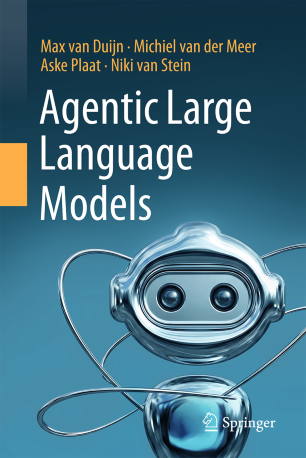
Agentic Large Language Models
Large language models that reason, act in the world and interact with each other. The book explains how agentic LLMs work, how they act and collaborate, and what that means for the people who use them.
The book is not yet released. Pre-order or follow it on the publisher's website.
What I work on
Explainable optimisation
Why does an optimiser behave the way it does? Structural bias, explainable benchmarking and landscape features.
BIAS · Deep-BIAS · DoE2VecAutomated algorithm design
Large language models that write, evolve and explain optimisation algorithms.
LLaMEA · LLaMEA-BO · BLADEXAI in the real world
Predictive maintenance, anomaly detection and engineering design with industry partners.
XAIPre · CIMPLO · GenAIDE · FINDLLaMEA evolves metaheuristics with large language models. Try it in one line.
$ pip install llamea
# LLaMEA · IEEE Transactions on Evolutionary Computation, 2024
$ git clone https://github.com/XAI-liacs/LLaMEA
On stage this year
- 28 SEP · LJUBLJANA
 SLIDES KEYNOTEAutomated Algorithm DesignAutoML Conference 2026
 - 15 AUG · BREMENKEYNOTEEfficiently Evolving Algorithms for Real-World ApplicationsWorkshop on Learning-assisted Algorithm Design (IJCAI-LEAD 2026)
- 30 JUL · DORTMUND
 VIDEO INVITED LECTURELLMs for Optimization in Code-Spaces: From Metaheuristic Design to AutoMLAutoML summer school
 - 13 JUL · COSTA RICAKEYNOTETowards a Universal Algorithm Constructor: Evolutionary Computation in the Age of LLMsECADA workshop, GECCO 2026
- 05 JUL · CHINAINVITED LECTUREAutomatic Algorithm Design with LLMs and Evolutionary ComputationPeking University summer school "Swarm Intelligence & Large Language Models: Intersection, Collision, and Academic Frontiers"
- 22 JAN · LEIDENINVITED KEYNOTEEvolving Knowledge: What Evolutionary Search and Agentic LLMs can teach usAI in Education: Impact, Insights, & Innovation